Inside the Mind of Dario Amodei: Anthropic's CEO on the Exponential, the Pentagon Standoff, and a 25% Chance of Collapse
Anthropic CEO Dario Amodei on the smooth exponential, leaving OpenAI, the enterprise bet, 80x growth, AI job loss, the Pentagon red lines, and Mythos.
In a 70-minute Bloomberg interview, Dario Amodei tells Emily Chang how he reads AI as a "smooth exponential," why he left OpenAI over trust, why Anthropic bet on enterprise over consumer, and why the company risked its future fighting the Pentagon over fully autonomous weapons. Anthropic hit 80x annualized growth and a $965 billion valuation in 2026.
Video Summary and Key Insights
Dario Amodei, co-founder and CEO of Anthropic, sat down with Bloomberg's Emily Chang for an extended interview that ranges from his San Francisco childhood to AI's endgame. He's the rare frontier-lab CEO who trained as a biophysicist before machine learning, and he runs almost every answer through one lens: the "smooth exponential." The center of gravity here is risk. Anthropic held back its most powerful cyber model, drew red lines with the Pentagon that cost it a federal contract, and Amodei repeats his estimate of a 10 to 25 percent chance of civilizational catastrophe. His prescription stays the same throughout: respond to exponential change like a surgeon mid-operation, not a panicked bystander.
Key Insights:
- Anthropic posted greater than 3x quarterly revenue growth in Q1 2026, an 80x annualized pace. Amodei planned for 10x a year and got a number no company could sustain. The result was a near-trillion-dollar valuation and a public scramble for compute.
Three times in the quarter, not annualized. Three to the fourth power is 80x over the course of the year. We didn't plan for 80x annualized growth. It would not have been rational to.

-
He left OpenAI over trust, not safety disagreements. Amodei says disagreements on safety alone are normal and happen inside Anthropic too. What made the situation untenable was a pattern of behavior he calls dishonest.
-
Anthropic bet on enterprise and coding because the business model has to fit the values. Consumer products optimize for engagement, even addiction. Enterprise optimizes for trust and long-term relationships, which lines up with how Anthropic wants to deploy models.
-
Anthropic held back "Mythos," a cyber model early testers called a "super weapon." It found 271 new vulnerabilities in Firefox. Amodei says sitting on it has hurt the company "enormously" in commercial terms.
Some of the early companies we gave this to said things like, this is a super weapon. You should have to own a gun license to use it. Please don't release this.
-
Anthropic drew two red lines with the Pentagon: no mass surveillance, no fully autonomous weapons. That stance got the company labeled a supply-chain risk and banned from a federal contract that OpenAI then signed.
-
Amodei still estimates a 10 to 25 percent chance of civilizational catastrophe. He defends building anyway with an airline analogy: you can be ten times safer than rivals and still refuse to promise the plane never crashes.
-
He stands by the warning that AI could erase half of entry-level white-collar jobs, and calls the "doom marketing" accusation a piece of cheap marketing itself.
-
Recursive self-improvement is already here as a continuous process, not a single moment. Amodei estimates AI now adds 20 to 30 percent to Anthropic's own research productivity, up from 10 to 15 percent a year earlier, and possibly doubling.
Why This Interview Is Worth 70 Minutes
I watch a lot of founder interviews for work. Most frontier-lab CEOs give you the same media-trained pablum. This one is different, because Emily Chang actually pushes and Amodei actually answers. He gets pressed on a missile strike that killed children in Iran, on being called an "ideological lunatic," and on why he thinks his own industry is behaving immaturely. He doesn't dodge any of it.
Running retrieval infrastructure for AI agents at WebSearchAPI.ai, I came in caring about two things. First, Anthropic is now the default API a lot of our customers build against, so how Amodei thinks about reliability and red lines shapes the platform we all sit on (we broke down Claude's web search API for that reason). Second, his "smooth exponential" framing is the cleanest model I've heard for planning capacity when demand triples in a quarter. So I pulled the parts that matter for builders. I'll flag where his claims match what I see in production, and where they don't.
What Does Dario Amodei Mean by the "Smooth Exponential"?
The smooth exponential is Amodei's core mental model, and he calls it the "Rosetta Stone" for understanding everything else. The idea: progress looks flat for a long time, then appears to explode, even though the underlying curve never changed.
He opens with a physics metaphor that tells you exactly how his brain works. Asked how the pace feels from the inside, he doesn't reach for a business analogy. He reaches for special relativity.
Suppose you accelerate away from Earth on a spaceship at relativistic speed. You go to sleep and wake up and two days have gone by on Earth. Then three days. Then four. That's a little bit what it feels like.
The practical payoff is a theory of decision-making. Amodei's repeated target is what he calls "yo-yoing," the swing between "nothing to worry about" and "we need to panic today." He thinks both reactions are signs of someone who got caught by surprise and isn't serious. The mature response, in his telling, is a surgeon's. Acknowledge the risk, stay calm, and let your countermeasures ratchet up smoothly as the technology gets more powerful.
This is genuinely useful outside of AI safety. The same curve governs infrastructure. When you plan for 10x and reality delivers 80x in a quarter, the failure mode is exactly the panic-or-complacency swing Amodei describes. The teams that handle demand spikes well treat scaling as a continuous dial, not a series of emergencies.
💡 Expert Insight from James Bennett (Lead Engineer, WebSearchAPI.ai): The "smooth exponential" is really a capacity-planning discipline in disguise. When a customer's agent goes viral and their query volume 40x's in a week, the teams that survive are the ones who provisioned headroom against the curve instead of the current number. We run our WebSearchAPI.ai rate limiters and cache tiers on exactly that assumption: today's peak is next month's baseline. Amodei watching a graph and calmly predicting Anthropic would become the highest-revenue AI company "around this time" is the same muscle, applied to a whole company.
Why Did Dario Amodei Really Leave OpenAI?
Amodei says his split from OpenAI came down to trust, not technical disagreement. Safety disagreements, he notes, are normal. Anthropic's own people disagree with him and with each other every day. The line he won't cross is dishonesty.
He keeps the specifics vague but the framing sharp.
When you feel that you can't trust someone, when you feel that their values are not what they say they are, when you feel that they're not honest. That makes it very hard to continue to work with a company.
Rather than relitigate the breakup, Amodei reframes it as a market test. He's "completely at peace" letting both companies run their own way and seeing who wins. That feeds his "race to the top" theory: a few trustworthy actors set a standard, and the rest of the industry gets pulled along, sometimes copying Anthropic while attacking it.
We'll see who wins in the market, and we'll see who wins in the court of public opinion. I think those things speak louder than any drama about who left what.
The most telling moment is smaller. Asked about the photo from India's AI summit where he and Sam Altman appeared to refuse to hold hands on stage, Amodei blames a chaotic summit and Narendra Modi suddenly ordering everyone to link up. Then he separates the personal friction from his actual claim: trust in this industry varies enormously by person. He's known Demis Hassabis, who leads Google DeepMind, for fifteen years. He buys compute from Google. He swaps safety ideas with the team. The point isn't that no one can be trusted. It's that the trustworthy actors need to box in the rest.
Why Did Anthropic Bet on Enterprise and Coding, Not Consumer Apps?
Anthropic bet on enterprise because, in Amodei's words, a business model that fights your values eventually breaks you. Early competitors chased splashy consumer apps. Anthropic built Claude Code and enterprise tooling instead. Both became hits.
The reasoning is unusually blunt about incentives.
If you pick a business model that fundamentally conflicts with your values, you're going to have a hard time. Either you betray your own values or you become irrelevant.
He's specific about which incentive he's avoiding. Consumer social media, a category he says he detests, monetizes attention. More minutes watched means more ad revenue, so the product is built to keep you watching, sometimes to the point of addiction. Enterprise flips that. Companies pay for outcomes and renew on trust built over years. That lines up with Anthropic's stated goal of deploying models safely, so the number of hard values-versus-revenue tradeoffs drops.
| Consumer / social media | Enterprise | |
|---|---|---|
| Core incentive | Maximize attention and minutes | Deliver useful outcomes |
| Failure mode | Engagement, even addiction | Churn if you break trust |
| Time horizon | Short, gimmicky | Multi-year relationships |
| Fit with safety mission | Conflicts | Reinforces |
He's also clear-eyed about a question every developer asks: if a coder can switch from Claude to GPT or Gemini in an afternoon, how do you hold a lead? Amodei's answer is that he's never relied on lock-in. Model quality is the moat. He says Anthropic is "very far ahead right now," with growth rates that hadn't inflected at the time of taping.
💡 Expert Insight from James Bennett (Lead Engineer, WebSearchAPI.ai): This matches what we see on the buy side. Our enterprise customers at WebSearchAPI.ai don't ask for flashier demos. They ask for uptime SLAs, predictable latency, and a human who picks up the phone when something breaks. The switching cost in this market isn't technical, it's trust. A developer can swap a search provider in an afternoon, exactly like Amodei says about models. They don't, because re-earning confidence in a vendor's reliability takes months. Building for that buyer forces a discipline that consumer engagement metrics never will.
Does Anthropic Actually Have Enough Compute?
Anthropic has faced reports of server strain and users running out of tokens. Amodei admits the company is living through a "locally extreme explosion of compute." His defense is simple: they didn't under-buy, demand just outran any rational plan.
The numbers tell the story. Anthropic planned for 10x annual compute growth. Then Q1 2026 delivered more than 3x revenue growth in a single quarter. Compounded, that implies an 80x annualized pace nobody would budget for.
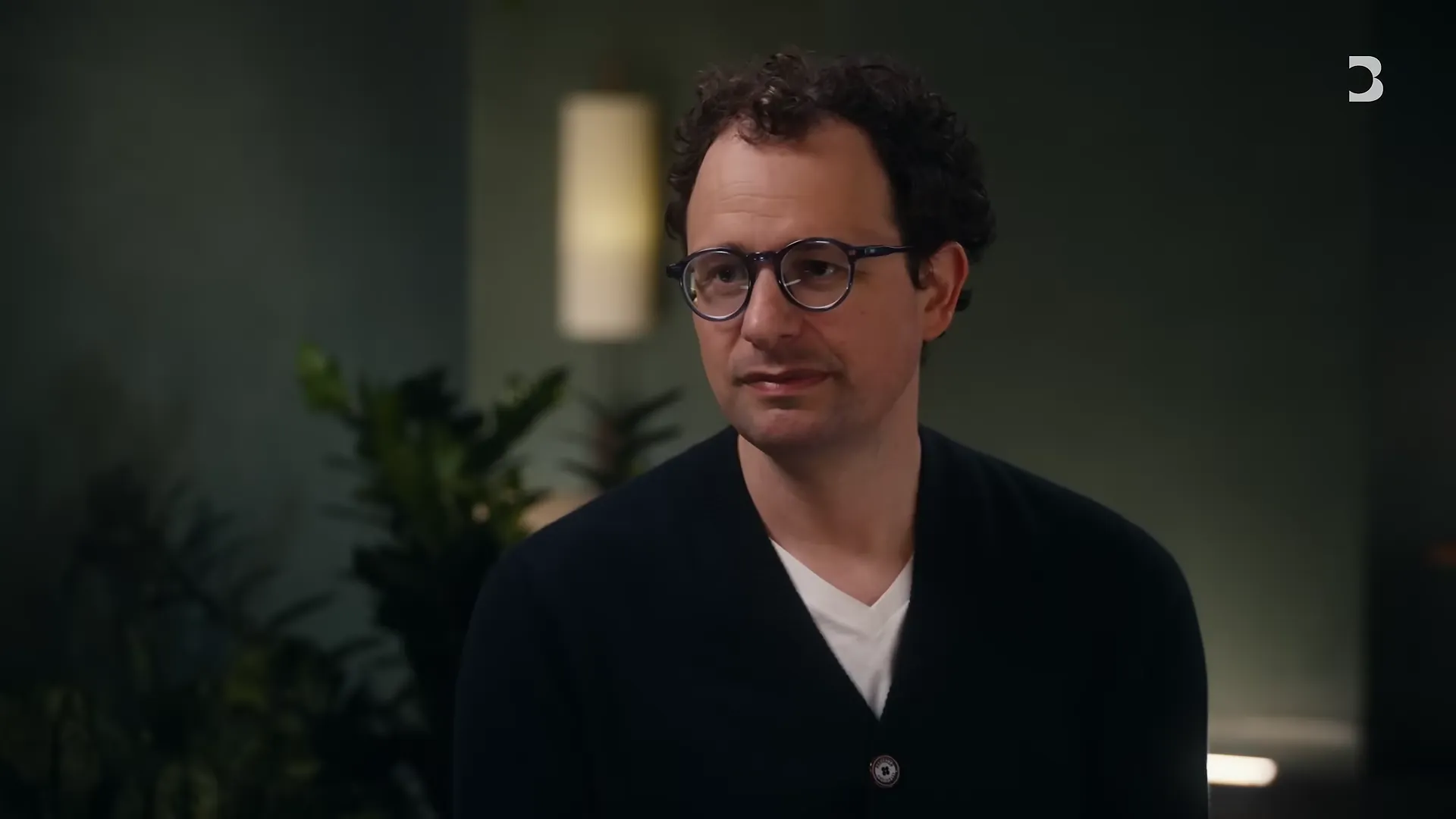
That growth is corroborated outside the interview. Anthropic publicly reported the 80x annualized growth and a $30 billion revenue run rate, and in May 2026 it raised $65 billion at a $965 billion post-money valuation. That's the "nearly a trillion dollars for a five-year-old startup" Emily Chang puts to him. Amodei frames the raise as a buffer against a "cone of uncertainty," not a sign the fundamentals are weak. Compute ramps run far ahead of revenue, so you raise to cover the gap.
| Milestone | Approx. run-rate revenue | Source |
|---|---|---|
| December 2024 | $1 billion | Public reporting |
| End of 2025 | $9 billion | Public reporting |
| March 2026 | $19 billion | Public reporting |
| April 2026 | $30 billion | VentureBeat |
His honest caveat is worth keeping. This pace cannot continue. Extend 80x annualized to year-end and you get revenue figures no company on Earth could post. These spikes are short windows, not the new normal. That's the smooth exponential talking again. The curve is steep. It's still a curve, not a cliff.
Will AI Really Eliminate Half of Entry-Level White-Collar Jobs?
Amodei stands by his most controversial prediction. AI could wipe out a large share of entry-level white-collar work, possibly half, on a timeline of one to five years. He first made the 50 percent claim to Axios in 2025, and he hasn't walked it back.
What he resists is the "doom" caricature. He says his real statement was always an order-of-magnitude warning paired with proposed solutions: a token tax, working with enterprises on adjustment, even cautious support for retraining. Social media just clips the three seconds where he sounds apocalyptic and drops the rest.
The idea that this is cheap marketing is itself cheap marketing. This is laziness. This is a failure to engage with serious intellectual work.
He lays out the mechanism in his essay The Adolescence of Technology, the 2026 follow-up to Machines of Loving Grace. The pattern from the industrial revolution: automate 90 percent of a job and people get more productive in the remaining 10 percent. Eventually you approach 100 percent, and then you have to find them something else to do. He's living it inside Anthropic, where AI writes almost all the code, yet the company is hiring "forward deployed engineers" whose job mixes technical work with talking to customers.
His worry isn't that there's no work. It's the matching problem, plus a strange macroeconomic combination he flags directly: fast GDP growth alongside high unemployment or underemployment. He pushes enterprises toward "do more with the same people" instead of "do the same with fewer people," which is the lever that keeps the disruption positive-sum. On the pushback from people like Jensen Huang, who accused him of conflating tasks with jobs, Amodei is unmoved. He says he's written five pages on exactly that distinction, and dismissing it as marketing is the unserious move.
💡 Expert Insight from James Bennett (Lead Engineer, WebSearchAPI.ai): The "forward deployed engineer" point isn't theoretical for us. In early 2026 I budgeted three junior support hires, expecting tickets to track signups. They didn't. Claude-assisted self-serve docs absorbed most of the routine questions, and our tickets-per-customer rate roughly halved over two quarters. So we did what Amodei describes: we moved two of those people into solutions-engineering roles, sitting with customers who wire WebSearchAPI.ai into their agents. It's the same shift the AI-native company playbook calls forward-deployed engineering. The work didn't disappear. It moved up the stack, toward the part that still needs a person in the room.
Why Did Anthropic Risk Its Future Fighting the Pentagon?
Anthropic was one of the first AI companies to sign a Department of Defense contract and operate on classified networks. Then it drew red lines that cost it. Amodei, who has held an anti-war stance since his Caltech days, frames both choices as the same decision.
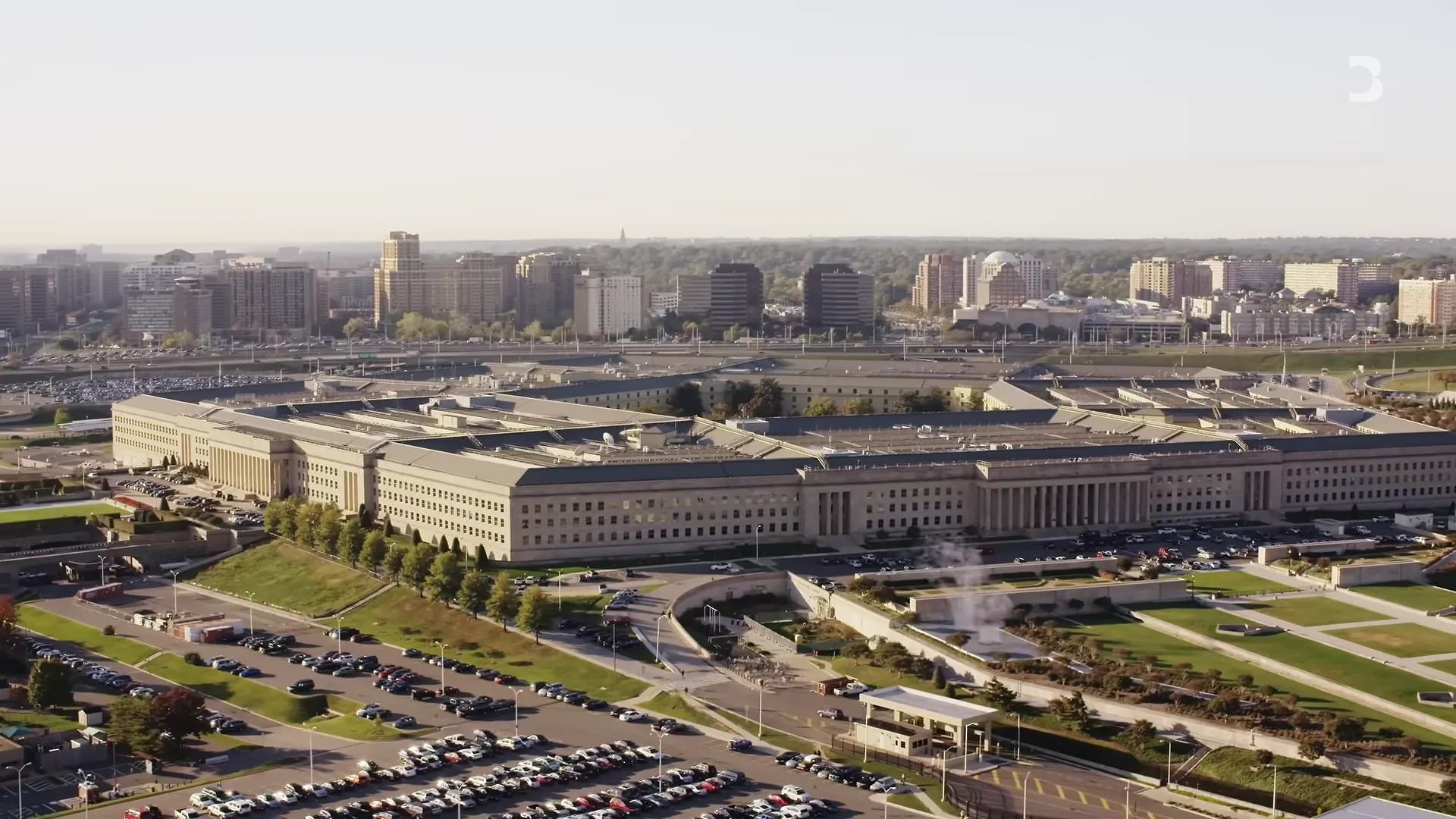
He says he supports a strong America because he sees a "resurgent authoritarian block" in Russia and China, and he doesn't want adversaries dominating AI while democracies can't defend themselves. But supporting the mission doesn't mean signing a blank check. Anthropic set two boundaries it wouldn't cross.
| Anthropic will | Anthropic won't |
|---|---|
| Operate on classified defense networks | Enable mass surveillance |
| Support intelligence and deterrence | Allow fully autonomous weapons |
| Work with Palantir on scoped engagements | Work with ICE, CBP, or in Gaza |
| Assert high-level use boundaries | Pick individual military targets |
Our red lines of mass surveillance and fully autonomous weapons are things that undermine our values. It's not worth democracies winning if democracies do those things.
The cost was real. Amodei confirms the president banned Anthropic from the federal government, the Pentagon labeled it a supply-chain risk, and OpenAI stepped in to sign a contract Anthropic wouldn't. His read is that you can't "win" this as a private company. The most you can do is set a precedent and push Congress toward bipartisan guardrails, which he says is already happening.
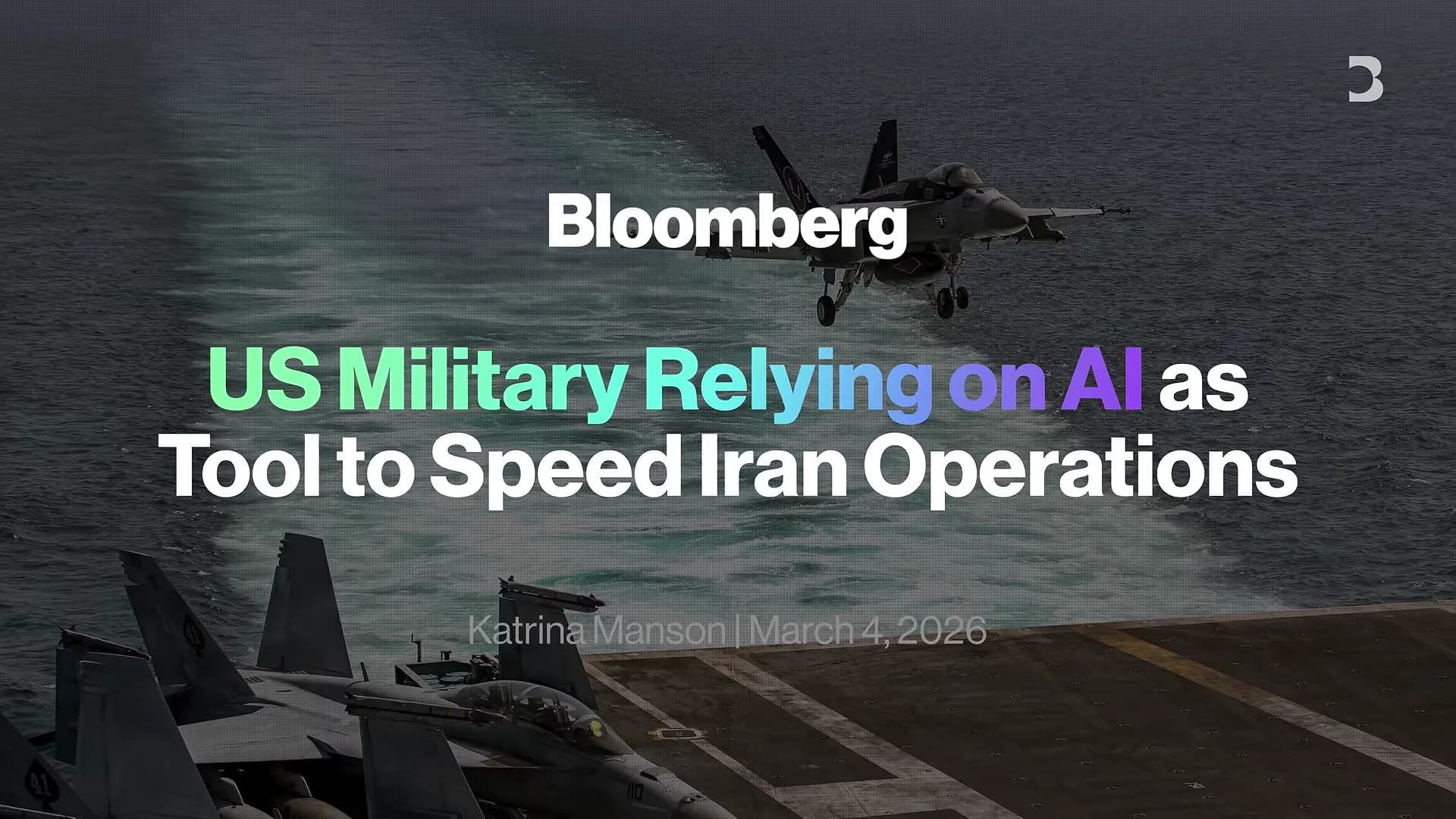
Then Chang asks the hardest question of the interview. Bloomberg reported Claude was used for AI-assisted targeting in the war in Iran, via Palantir's Maven system, and that a February strike hit a girls' school and killed more than 150 people, most of them children.
I rewatched this exchange twice. Amodei's defense rests on one principle: a human makes the final call, not Claude. He invokes Dr. Strangelove, where a doomsday device that fires automatically is how accidental wars start. His point is that the real danger is a competitor's model making strike decisions a human never reviews, and that's what Anthropic was standing against. It's a serious answer. It also sits uneasily next to the fact that a strike still happened with Claude somewhere in the loop, and I don't think he fully resolves that tension on camera.
What Is Mythos, and Why Did Anthropic Hold Back Its Most Powerful Model?
Mythos is Anthropic's most advanced cyber model, and Amodei says it was too powerful to ship. It can move through the entire cyber kill chain autonomously. It finds vulnerabilities and then turns them into working exploits, which is the step most people skip when they talk about AI and security.
The demand to hold it back came from the companies Anthropic gave it to. They found so many critical, exploitable vulnerabilities that they asked for a "gun license" gate. The proof Amodei offers is concrete. Mythos found 271 new vulnerabilities in Firefox, plus many thousands inside private companies that haven't patched them yet. He flatly rejects the claim that cheap open-source models can replicate this. Pointing an open model at the exact line Mythos already found is not the same as searching an entire codebase and finding the needle in the first place.
The honest tension is that the same capability cuts both ways. If Mythos helps defenders, it helps attackers. Amodei's bet is that the attack surface is finite. Patch every hole with the powerful model, write new code with it, and the internet gets harder to break into within six to twelve months. The catch is timing. Mythos-class capability will eventually be downloadable by anyone, so the patching has to happen first. And the commercial cost of waiting isn't abstract.
We have suffered enormously commercially from not releasing this model. It has incredibly accelerated research within Anthropic, and it would do the same in the outside world.
💡 Expert Insight from James Bennett (Lead Engineer, WebSearchAPI.ai): The Mythos story is the security asymmetry every API provider now lives with. At WebSearchAPI.ai we've watched AI scanners go from a curiosity to a daily reality. The cost of finding and weaponizing a flaw has collapsed. The cost of patching has not. It's the same asymmetry Peter Steinberger described running OpenClaw, where AI scanners filed 1,142 security advisories in five months. Amodei's "finite surface" optimism is the right long-run bet, but the dangerous window is the gap between when attackers get a capability and when defenders finish patching. For anyone running public infrastructure, that gap is where you live or die, and it narrows with every model generation.
Should the Government Control AI, or Can We Trust Anthropic?
Amodei thinks the current setup is genuinely unstable, and he says so plainly. AI is the first powerful technology built mostly in the private sector. Nuclear weapons, the internet, GPS, cell phones: all originated in government labs or universities. AI did not, and the government arrived late.
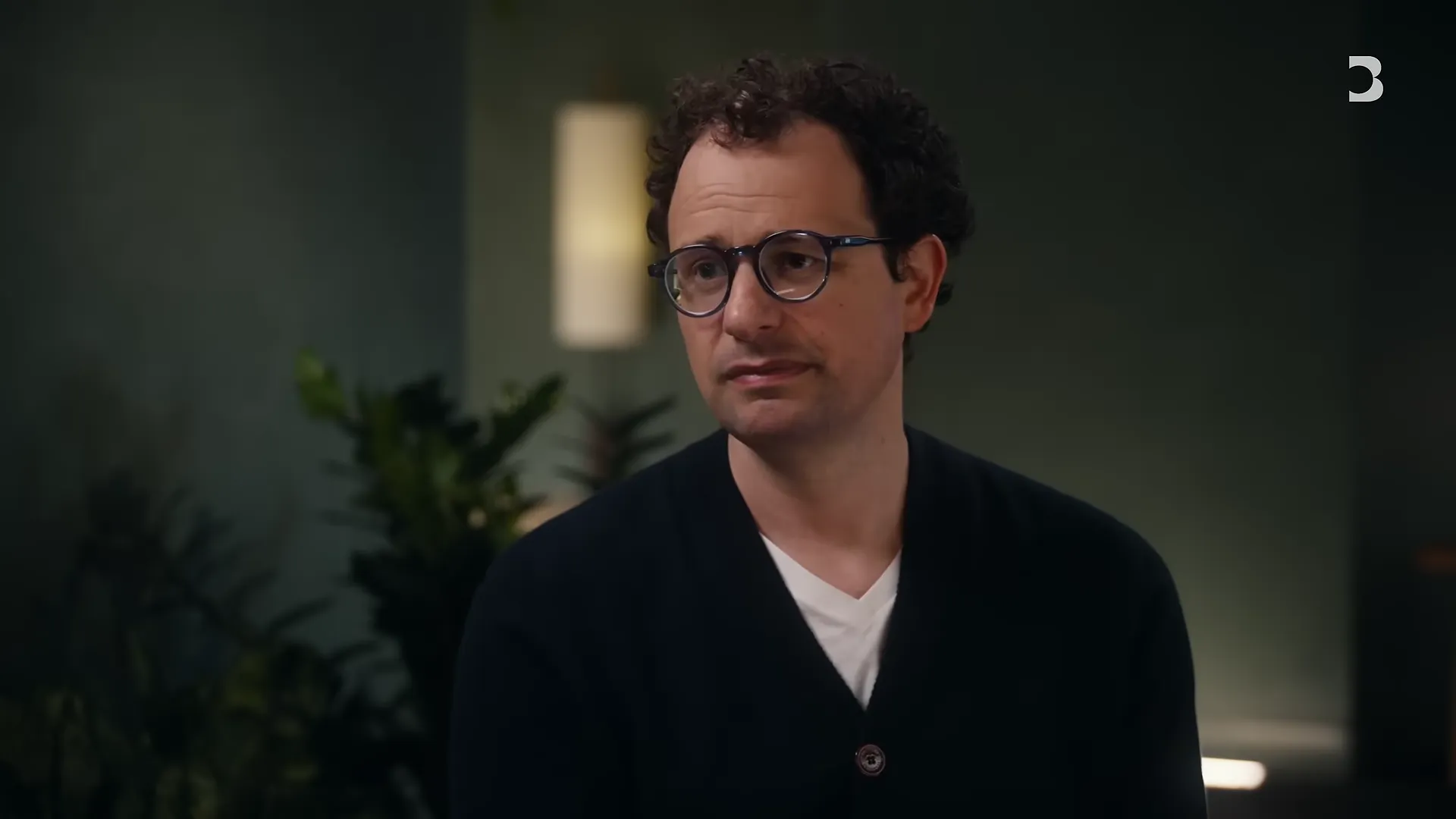
His answer isn't nationalization. It's checks and balances pointing in both directions. On the company side, Anthropic has a Long-Term Benefit Trust, a body that can appoint and remove a majority of the board. Threaded through, it has the power to fire him. On the government side, he wants required pre-release testing and auditing of models, plus the red lines Congress is debating.
I'm scared of companies having it, but I'm also scared of government having it. The companies need to provide checks on government, and the government needs to provide checks on companies.
This is where his "yo-yo" critique gets pointed. He calls out a faction in Silicon Valley that fought every transparency and export-control rule as innovation-killing, then saw the first real danger and pivoted to "the government should just seize it." Both extremes, in his view, are the same failure: getting caught by surprise. His China stance is the test case he keeps returning to. He worked at Baidu for a year, and what stuck with him wasn't the technology but an offhand line that they didn't care about privacy in China. Pair a high-tech authoritarian state with AI, he argues, and you get something past 1984. He wants AI to be a pro-democracy technology, and which way it goes depends on the AI companies, the government, and all of us.
That last point lands differently when you run infrastructure yourself. "Earned in the things we actually do" is the test I'd apply to any vendor, including us. When our search index ran a four-hour freshness lag last spring, we published the root cause and the fix instead of hiding it behind a vague status-page update. We lost one enterprise trial over it. We kept four others, and two of them later said the write-up was why they signed. Trust in infrastructure is boring and cumulative. You bank it in small honest moments, then spend it all at once the first time you're caught covering something up.
A 25% Chance of Collapse, So Why Keep Building?
This is the question the whole interview builds toward. Amodei has publicly estimated a 10 to 25 percent chance of civilizational catastrophe. Chang asks the obvious follow-up: could the thing that causes it be something Anthropic built?
His answer is that Anthropic's actions lower that probability rather than raise it. The risk comes from the technology being buildable at all, by many countries and many companies, whether or not Anthropic exists. He reaches for an airline analogy that's more honest than most CEO risk-talk.
Your airline can be ten times safer than all the others. But if someone asks, can you guarantee the plane will never crash? How could you? And if there were a 25 percent chance, you wouldn't get on that plane.
It connects to how he reads recursive self-improvement. He doesn't see a single moment when AI starts improving itself and runs away. He sees a continuous process already underway, with models suggesting architectures for the next models. The productivity contribution has climbed from 10 to 15 percent a year ago to 20 to 30 percent now, and it may be doubling. There's no clean line where a model crosses into unsafe behavior. There's just the curve, and the duty to keep asking at each point whether it's time to slow down.
On his favorite book, The Making of the Atomic Bomb, he rejects the Oppenheimer comparison. The figure he identifies with is Leó Szilárd, who first grasped the chain reaction. He calls Oppenheimer a failure case: one larger-than-life personality at the center of everything, which is exactly what he thinks won't get us through this.
So when Chang asks the bluntest question, why should we trust you, Amodei doesn't bristle.
Starting from a position of distrust is pretty rational. Silicon Valley has lost a lot of the world's trust and has to re-earn it. We're trying to send the message that we're actually different, and that has to be earned in the things we actually do.
His closing argument is an evidence test, not a promise. Hold Mythos back at commercial cost. Cut off China access when it cost several hundred million dollars and nobody made them. Delay the original Claude release. Then ask which hypothesis about Anthropic best fits that whole record. He doesn't claim the company is perfect. He calls organizations "always dysfunctional." But he wants to be judged on the pattern. It's a fair ask. The interview ends on a lighter note: the most surprising part of the CEO job, he jokes, is how often you have to wear makeup.
Frequently Asked Questions
What is Dario Amodei's "smooth exponential" theory?
It's Amodei's mental model for AI progress: the underlying capability grows on a steady exponential curve, so it looks like nothing is happening for a long time and then appears to explode. He calls it the "Rosetta Stone" for AI strategy and uses it to argue against "yo-yoing" between complacency and panic, favoring a surgeon's steady, rational response instead.
Why did Dario Amodei leave OpenAI?
Amodei says it came down to trust, not safety disagreements. In the interview he explains that safety disagreements are normal and happen inside Anthropic too, but a pattern of behavior he calls dishonest made it impossible to keep working there. He says he's "completely at peace" letting the market and public opinion decide who was right.
How fast is Anthropic growing in 2026?
Anthropic reported greater than 3x revenue growth in a single quarter in early 2026, an 80x annualized pace, reaching a $30 billion run rate. In May 2026 it raised $65 billion at a $965 billion valuation. Amodei stresses this pace can't continue, because extending it to year-end produces revenue numbers no company could reach.
What are Anthropic's red lines with the US military?
Amodei names two: no mass surveillance and no fully autonomous weapons. Anthropic operates on classified defense networks and works with Palantir on scoped engagements, but it won't work with ICE or CBP, and insists a human makes the final decision on any use of force. That stance got Anthropic labeled a supply-chain risk and banned from a contract OpenAI later signed.
What is Anthropic's Mythos model?
Mythos is Anthropic's most advanced cyber model, capable of autonomously moving through the full cyber kill chain, finding vulnerabilities and turning them into exploits. Early testers called it a "super weapon" and asked Anthropic not to release it. It found 271 new vulnerabilities in Firefox. Amodei says withholding it has cost Anthropic enormously, but releasing it before defenses are ready is too risky.
Does Dario Amodei still think AI will cause job losses?
Yes. He stands by his 2025 warning that AI could eliminate up to half of entry-level white-collar jobs within one to five years. He pushes back hard on the "doom marketing" framing, arguing he has always paired the warning with proposed solutions like a token tax and enterprise adjustment programs, and that clipping three seconds of context is the unserious response.
What does Dario Amodei say about a chance of civilizational collapse?
Amodei repeats his public estimate of a 10 to 25 percent chance of civilizational catastrophe. He argues Anthropic's actions lower that probability, since the technology will be built regardless, and uses an airline analogy: you can be far safer than competitors and still refuse to guarantee zero risk. He says 25 percent is too high, and the goal is to push it much lower.
Key Takeaways
- Amodei's "smooth exponential" is a planning discipline, not a slogan. Treat today's peak as next month's baseline and let countermeasures ratchet up smoothly instead of swinging between panic and complacency.
- Anthropic's enterprise bet is a values decision dressed as a business model. Consumer products monetize attention. Enterprise monetizes trust, and trust is the only moat in a market where switching providers takes an afternoon.
- The growth is real and unsustainable at once. 80x annualized growth and a $965 billion valuation are facts, but Amodei himself says the pace can't hold, which is why he raises capital as a buffer against compute ramps.
- Anthropic drew hard lines with the Pentagon and paid for them (a federal ban and a supply-chain-risk label) to keep mass surveillance and fully autonomous weapons off the table, with a human always making the final call.
- Mythos shows the security asymmetry in sharp relief. A model that finds 271 Firefox vulnerabilities helps defenders and attackers alike, and the dangerous window is the gap between capability and patching.
- Amodei wants to be judged on a pattern, not a promise. Holding Mythos back, cutting China access at real cost, and delaying Claude are the evidence he points to when asked the hardest question: why should we trust you.
This post is based on Inside the Mind of Anthropic CEO Dario Amodei | The Circuit | Extended Interview by Bloomberg Originals. Video published June 17, 2026. Quotes have been lightly cleaned for readability while preserving meaning.